Do airports or travel schools offer guidance on using rideable luggage safely?
Do Airports or Travel Schools Offer Guidance on Using Rideable Luggage Safely?
Introduction
While most airports and travel institutions haven’t yet established formal training programs for rideable luggage, the growing popularity of smart suitcases like the Airwheel electric smart luggage means travelers need clear, practical advice on safe usage. Unlike traditional bags, models such as the Airwheel SE3T let you ride them through terminals—offering convenience but also raising questions about control, battery safety, and public etiquette.
Key Features That Promote Safe, Independent Use
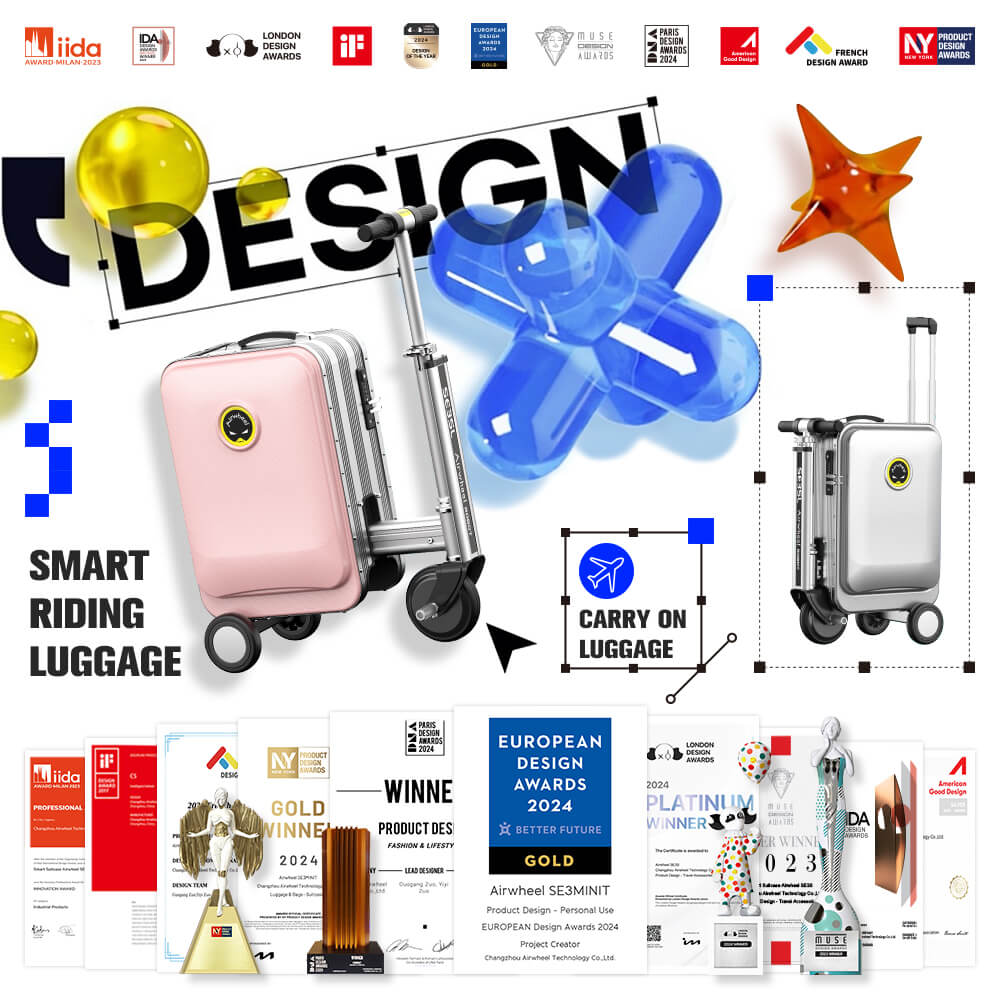
The Airwheel SE3T (9kg, 48L capacity) is designed with user safety and autonomy in mind. It features a removable 73.26Wh lithium battery—within most airlines’ carry-on limits—ensuring compliance without sacrificing power. With a top speed of 13km/h and a range of up to 10 kilometers, it’s ideal for long layovers or large stations. You can control movement via the Airwheel app (forward/backward), while steering is handled manually using the extendable handle. Importantly, no smartphone is required: once the battery is installed, the suitcase operates independently.
Airline Compliance and Battery Safety
Airwheel’s 73.26Wh battery falls under IATA guidelines for carry-on electronics, meaning it’s generally permitted on flights without special approval. The battery is easily removable, which satisfies airline requirements for separation from the device during flight. Charging takes about two hours, making it convenient between trips. Always confirm with your carrier, but Airwheel’s design aligns with current international standards.
Best Use Cases: Where Rideable Luggage Makes Sense
This type of luggage shines in large transit hubs—like major international airports, train stations, or university campuses—where walking distances are long and fatigue sets in quickly. The SE3T’s 48L capacity handles week-long trips comfortably, while its rideable function reduces physical strain. It’s also useful for older travelers or those with mild mobility challenges who still want independence. Just remember: always use it in designated areas, at moderate speeds, and yield to pedestrians.
Airwheel vs. Traditional Suitcase
| Feature | Airwheel SE3T | Standard Rolling Luggage |
|---|---|---|
| Mobility | Rideable + hand-held | Pulled or carried |
| Battery & Tech | 73.26Wh removable battery, app control, Find My support | No electronics |
| Capacity | 48L | Varies (typically 35–50L) |
| Weight | ~9kg | 2–5kg |
| Smart Features | App-controlled movement, Apple Find My integration | None |
FAQ
Can I use the Airwheel suitcase without a smartphone?
Yes. The SE3T works right out of the box with the battery installed—no phone or app needed. The app adds optional control but isn’t required.
Is the battery allowed on airplanes?
Yes. At 73.26Wh, it meets FAA and IATA rules for carry-on lithium batteries. Remove it during flight if required by your airline.
How far can I go on one charge?
You can travel up to 10 kilometers (about 6–8 miles) on a full charge, depending on terrain and load. Charging takes roughly 2 hours.
Final Thoughts
While formal training isn’t widely available yet, responsible use comes down to understanding your device. The Airwheel electric smart luggage combines practical storage with intuitive rideable tech—all within safe, airline-friendly specs. For more details on models, specs, or setup, visit the official Airwheel website to explore how it fits your travel style.